 +234 902 333 3331
 info@npc.clinic
 29 Agadez Crescent, Wuse II, Abuja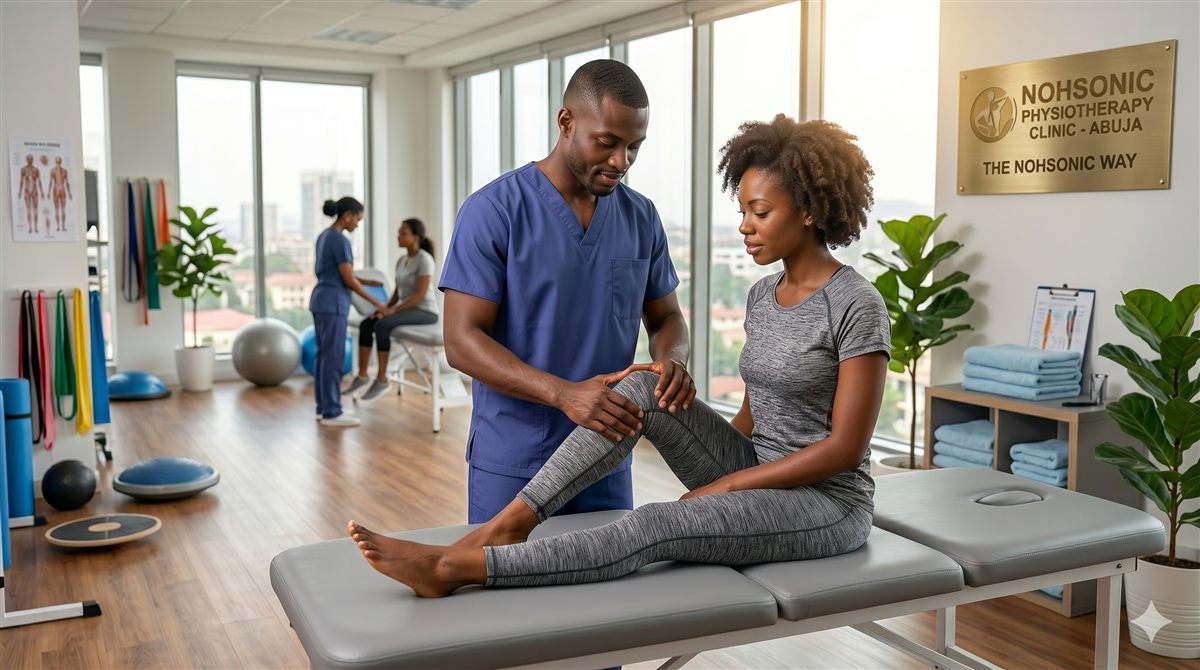
Knee pain is one of the most common musculoskeletal complaints in Nigeria, affecting people across every age group and walk of life. Young athletes sustain ligament and cartilage injuries during sport. Middle-aged workers develop overuse conditions from years of repetitive activity. Older Nigerians, particularly women, frequently develop knee osteoarthritis — a condition that has become increasingly prevalent as life expectancy rises. Whatever the cause, knee pain can be debilitating, limiting your ability to walk, climb stairs, kneel in prayer, play with your children, or continue the activities that make life full and meaningful. The good news is that physiotherapy is one of the most effective treatments available for knee pain — in many cases, it is more effective than surgery or long-term medication.
Common Causes of Knee Pain in Abuja
At NOHSONIC Physiotherapy Clinic, we diagnose and treat all of the most common causes of knee pain. Understanding which condition you have is the first step toward effective treatment:
- Knee osteoarthritis: Extremely common in older Nigerians, particularly those over 50. The gradual breakdown of knee cartilage causes pain, swelling, stiffness, and a grating sensation. It is often worse in the morning and after prolonged activity.
- ACL and MCL ligament injuries: Common in footballers and other athletes, ligament tears cause sudden, severe knee pain with instability — the feeling that the knee "gives way" during activity.
- Meniscus tears: The menisci are the shock-absorbing cartilage pads within the knee. Tears cause pain on the inner or outer side of the joint, swelling, and sometimes a locking sensation where the knee becomes temporarily stuck.
- Patellofemoral pain (runner's knee): An aching pain around or behind the kneecap, worsened by running, squatting, climbing stairs, or sitting for long periods with the knee bent.
- IT band syndrome: A sharp, burning pain on the outer side of the knee, very common in runners who increase their mileage too quickly.
- Patellar tendinopathy: Pain and stiffness at the tendon just below the kneecap, common in athletes who perform a lot of jumping — including basketball players and footballers.
- Post-surgical stiffness: After knee surgery — whether for ligament reconstruction, meniscectomy, or joint replacement — structured physiotherapy is essential to restore movement, strength, and full function.
When Should You See a Physiotherapist for Your Knee?
Many people put up with knee pain for months or years before seeking help — often hoping it will resolve on its own. While minor aches sometimes settle with rest, there are clear signs that professional assessment and treatment is needed:
- Pain that has lasted more than two weeks without improvement
- Visible swelling around the knee joint
- The knee locking, clicking loudly, or giving way unexpectedly
- Pain when climbing stairs, getting up from a chair, or kneeling
- Difficulty fully straightening or bending the knee
- Pain that is worsening or interfering with sleep
- Knee pain that has returned after a previous injury
If you experience severe pain, sudden locking, or significant swelling after a fall or sporting impact, you should seek urgent medical attention to rule out a serious structural injury before beginning physiotherapy.
How NOHSONIC Treats Knee Pain
At NOHSONIC, treatment begins with a thorough assessment — not just of the knee itself, but of the entire lower limb and movement patterns. Often, the root cause of knee pain lies in weakness or stiffness elsewhere: tight hip flexors, weak gluteal muscles, flat feet, or poor movement technique during sport or exercise. Our assessment includes a biomechanical analysis to identify these contributing factors.
Based on the findings, we build a personalised treatment plan that typically includes:
- Manual therapy: Joint mobilisation of the knee, hip, and ankle to improve movement, reduce pain, and restore normal mechanics.
- Targeted strengthening: Exercises to build strength in the quadriceps, hamstrings, and glutes — the muscles that protect and stabilise the knee joint. Weak quads are one of the most common contributors to knee osteoarthritis pain.
- Taping and bracing: Where appropriate, we use patellofemoral taping or knee bracing to offload painful structures and allow active rehabilitation to progress.
- Electrotherapy modalities: Therapeutic ultrasound, TENS, and laser therapy can assist with pain management and tissue healing, particularly in the early stages of treatment.
- Functional and sport-specific training: As you progress, we introduce movement patterns relevant to your daily activities or sport — building your confidence and ensuring the knee can handle real-world demands before discharge or return to play.
Can Physiotherapy Prevent Knee Surgery?
For many patients with knee osteoarthritis and certain meniscus conditions, the answer is yes. Growing evidence from high-quality clinical trials shows that a structured physiotherapy programme — focusing on strength, movement, and load management — is as effective as surgery for reducing pain and improving function in knee osteoarthritis, and even in some cases of meniscus tear. In Nigeria, where the cost and risks of surgery are a significant concern for many patients, this is particularly important news.
This does not mean surgery is never needed — ACL tears with instability, advanced joint degeneration, or certain structural problems may ultimately require surgical intervention. But in those cases, physiotherapy before surgery (prehabilitation) and after surgery (rehabilitation) remains essential for the best possible outcome.
"Many patients come to us after being told they need surgery. After a structured physiotherapy programme, a significant number avoid the operating table entirely."
If you have been told surgery is your only option, we encourage you to seek a physiotherapy assessment first. You may be surprised at what a well-designed rehabilitation programme can achieve.
To learn more about the full range of conditions physiotherapy treats, read our complete guide to physiotherapy in Abuja →
Don't let knee pain limit your life. Call NOHSONIC on 09023333331 / 08131555597 or book your appointment at our clinic in 29 Agadez Crescent, Wuse II, Abuja. Our physiotherapy team will assess your knee thoroughly and design a treatment plan that gets you moving freely and confidently again.