 +234 902 333 3331
 info@npc.clinic
 29 Agadez Crescent, Wuse II, Abuja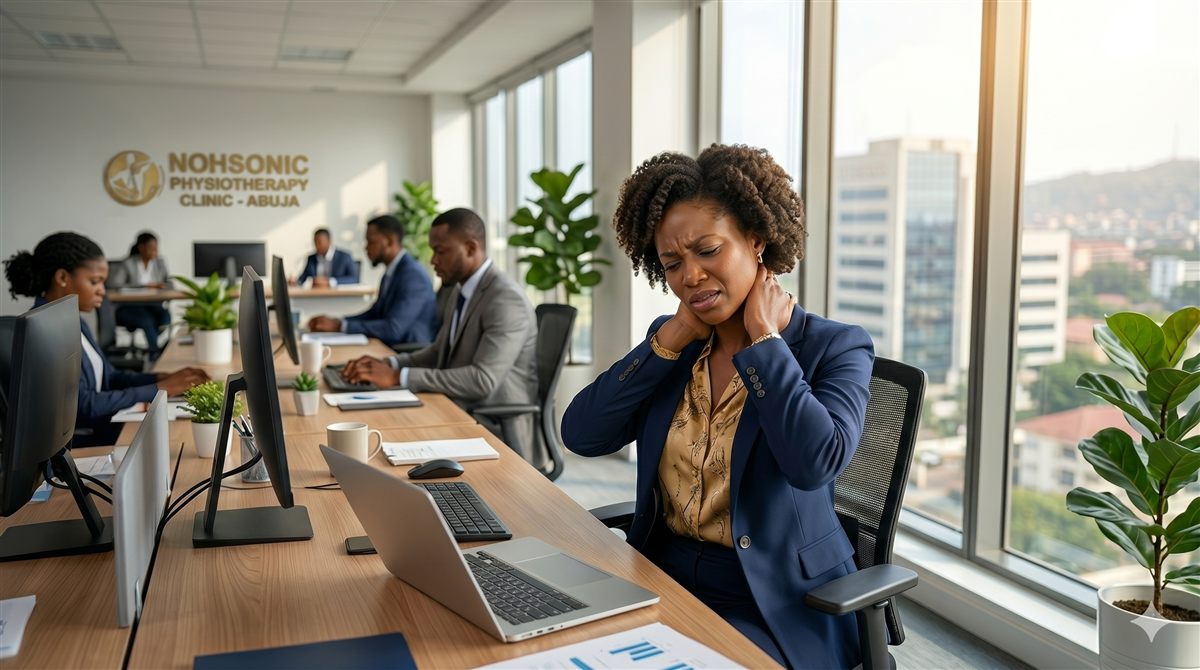
Abuja is the nerve centre of Nigeria's government and corporate world. Thousands of civil servants, diplomats, lawyers, bankers, tech professionals, and business executives spend the majority of their working hours seated at a desk — often in front of multiple screens, attending meetings, and under constant deadline pressure. For many of these workers, the long days of sitting have a painful cost: chronic neck pain, lower back pain, tension headaches, and shoulder stiffness that accumulate quietly over months and years until they become impossible to ignore. At NOHSONIC Physiotherapy Clinic in Wuse II, Abuja, we treat a high volume of office workers every week — and in most cases, the underlying cause is both predictable and entirely treatable.
Why Do Office Workers in Abuja Suffer So Much Pain?
The human body was not designed to sit still for eight or more hours a day. When we sit — particularly in the forward-leaning, head-down posture that most desk workers adopt — we place the spine in a position it was never meant to sustain for prolonged periods. The muscles at the front of the body shorten and tighten, while the muscles at the back become overstretched and fatigued. Over time, this imbalance distorts the natural curves of the spine and creates focal points of stress in the neck and lower back.
In Abuja, the problem is compounded by several factors specific to the local working environment: long commutes — often 60 to 90 minutes each way — mean workers are sitting even before they reach the office. Unergonomic workstations with chairs at the wrong height, monitors placed too low or too far away, and laptops used without external keyboards force workers into harmful positions for hours at a time. Stress from demanding work cultures further increases muscular tension — particularly around the neck and upper back. And a general lack of structured movement breaks means the body never gets a chance to reset throughout the day.
Common Conditions in Abuja's Office Workers
The combination of prolonged sitting, poor posture, and workplace stress gives rise to several musculoskeletal conditions that we see regularly at NOHSONIC:
- Cervicogenic headaches: Headaches originating from tightness and joint dysfunction in the neck. Often felt as a dull ache at the base of the skull that spreads to the temples or behind the eyes.
- Upper cross syndrome: A pattern of muscle imbalance where the chest and upper neck muscles are overactive and tight, while the deep neck flexors and mid-back muscles are weak. This creates the classic rounded-shoulder, forward-head posture seen in so many desk workers.
- Lower back pain: Sustained sitting loads the lumbar discs unevenly and deactivates the core muscles, leading to pain, stiffness, and sometimes disc problems over time.
- Carpal tunnel syndrome: Repetitive keyboard and mouse use can compress the median nerve at the wrist, causing tingling, numbness, and weakness in the hand.
- Shoulder impingement: Poor posture reduces the space available for the rotator cuff tendons, making painful shoulder catching and aching common among desk workers.
- Text neck: The habit of looking down at a mobile phone for hours a day dramatically increases the load on the cervical spine, accelerating degeneration and causing pain in younger workers than ever before.
How Physiotherapy Treats Office-Related Pain
At NOHSONIC, we do not just treat the area that hurts — we look at the whole picture. Our approach to office-related musculoskeletal pain includes:
- Postural assessment: A detailed analysis of how you sit, stand, and move to identify the specific postural faults driving your pain.
- Manual therapy: Hands-on joint mobilisation and soft tissue release to address stiffness and tension in the neck, thoracic spine, and lower back.
- Targeted strengthening: A progressive programme to build strength in the muscles that support good posture — including the deep neck flexors, mid-back stabilisers, and core.
- Ergonomic advice: Practical, evidence-based guidance on how to set up your workstation correctly — including chair height, monitor position, keyboard placement, and lighting.
- Workplace ergonomics assessment: For companies and individuals who want a more thorough review, we offer dedicated ergonomics assessments to optimise the physical working environment and reduce injury risk across the workforce.
Simple Things You Can Do Right Now
While professional physiotherapy is the most effective solution for established pain, there are practical steps you can take today to reduce your risk and ease existing discomfort:
- Sit up straight: Ensure your lower back has gentle support, your feet are flat on the floor, and your hips and knees are at roughly 90 degrees.
- Adjust your monitor height: The top of your screen should be at or slightly below eye level. Looking down at a low monitor for hours is one of the most common causes of neck pain.
- Take a movement break every 45 minutes: Stand up, walk around, and move your body for two to three minutes. Even brief movement breaks significantly reduce the cumulative stress of sitting.
- Stretch your hip flexors: Prolonged sitting tightens the hip flexors, which tilts the pelvis forward and increases lower back strain. A daily kneeling hip flexor stretch can make a meaningful difference.
- Strengthen your core: Even 10 minutes of core exercises per day — planks, dead bugs, bird-dogs — builds the muscular support your spine needs to stay healthy through a long workday.
These tips will help, but if pain is already present, do not rely on self-help alone. Professional assessment and treatment will resolve the problem far more quickly and reliably.
For a comprehensive overview of physiotherapy and how it can help, read our complete guide to physiotherapy in Abuja →
Suffering from neck or back pain at your desk? Call NOHSONIC on 09023333331 / 08131555597 or book your appointment online. We also offer workplace ergonomics assessments for organisations in Abuja — speak to us about how we can help your team stay pain-free and productive. Our clinic is at 29 Agadez Crescent, Wuse II, Abuja.