 +234 902 333 3331
 info@npc.clinic
 29 Agadez Crescent, Wuse II, Abuja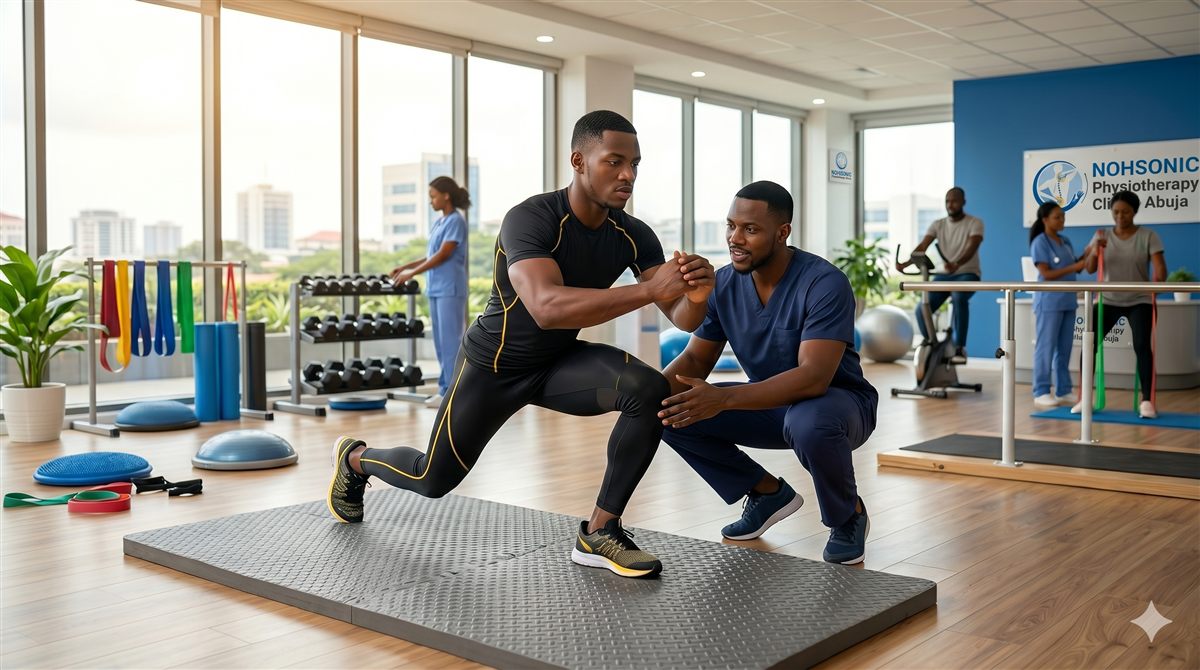
Nigeria has a deeply passionate sports culture. From the dust pitches of neighbourhood football games to the courts and tracks of Abuja's growing fitness community, millions of Nigerians are active every day. Football remains the nation's heartbeat, but basketball, athletics, gym training, and recreational sports are rapidly growing — especially in Abuja's urban population. With this activity comes an unavoidable reality: sports injuries happen. Whether you are a weekend footballer, a competitive athlete, or a gym enthusiast, sustaining an injury can be both physically painful and mentally deflating. The good news is that with the right physiotherapy, most sports injuries heal completely — and you can return to the sport you love stronger than before.
Most Common Sports Injuries We Treat in Abuja
At NOHSONIC Physiotherapy Clinic, we see a wide range of sports injuries across all sports and fitness levels. The most frequent presentations include:
- Ankle sprains: Extremely common in football and basketball, where sudden changes of direction can roll the ankle and stretch or tear the lateral ligaments.
- ACL and knee ligament tears: One of the most feared injuries in sport. An ACL tear requires careful, structured rehabilitation — whether managed conservatively or following surgery.
- Hamstring strains: A frequent injury among sprinters, footballers, and athletes who perform explosive movements. Poor warm-up and muscle imbalances are key risk factors.
- Shoulder injuries: Including rotator cuff tears, shoulder impingement, and dislocations — common in throwing sports, swimming, and weightlifting.
- Stress fractures: Caused by repetitive loading over time, often seen in runners who increase their training volume too quickly.
- Tennis elbow and golf elbow: Overuse conditions affecting the tendons at the elbow, increasingly common among racquet sport players and gym-goers who grip heavily.
The NOHSONIC Sports Injury Rehabilitation Process
Effective sports injury rehabilitation is not a single treatment — it is a structured journey through distinct phases, each building on the last. At NOHSONIC, we follow a proven, evidence-based process:
- Phase 1 — Acute management: In the first 24 to 72 hours after injury, the priority is to control swelling, protect the injured tissue, and manage pain. We guide you through the correct early management and use hands-on techniques and modalities to reduce inflammation without delaying the natural healing process.
- Phase 2 — Restoring movement: Once acute pain and swelling settle, we work to restore your full range of motion, flexibility, and early strength. Gentle mobilisation, stretching, and progressive loading are introduced carefully to encourage tissue remodelling without re-injury.
- Phase 3 — Strength and conditioning: This is where the real work happens. We build the muscular strength, stability, and endurance around the injured area and the body as a whole. Weakness and poor movement patterns that contributed to the injury are corrected here, reducing the risk of recurrence.
- Phase 4 — Sport-specific training and return to play: The final phase bridges the gap between the clinic and the pitch or court. We replicate the demands of your sport in a controlled environment, testing your readiness and building your confidence before you return to full competition.
How Long Does Sports Injury Recovery Take?
Recovery time depends on the nature and severity of the injury, your overall health, and — crucially — how quickly you begin appropriate physiotherapy. As a general guide:
- Mild ankle sprain: 2 to 4 weeks with early physiotherapy
- Hamstring strain (Grade 1-2): 3 to 8 weeks
- Shoulder impingement: 6 to 12 weeks
- ACL reconstruction rehabilitation: 9 to 12 months for safe return to competitive sport
- Stress fracture: 6 to 10 weeks of relative rest, followed by a graduated return-to-run programme
These timelines are estimates — individual results vary. What is universally true is that athletes who begin physiotherapy early, follow their programme consistently, and do not rush back prematurely recover faster and suffer fewer re-injuries than those who wait or self-manage.
"The biggest mistake athletes make is waiting too long before seeking physiotherapy. Early treatment leads to faster, safer recovery."
At NOHSONIC, we understand the frustration of being sidelined. We work with you as a partner in your recovery — not just as a clinician treating an injury, but as someone who understands what it means to want to compete and perform. Our goal is to get you back to your sport safely, at the right time, and better prepared than you were before the injury occurred.
For a broader understanding of what physiotherapy covers, return to our complete guide to physiotherapy in Abuja →
Don't let a sports injury keep you on the sidelines longer than necessary. Call 09023333331 / 08131555597 or book your appointment at NOHSONIC Physiotherapy Clinic in Wuse II, Abuja, and let us help you make a full, confident return to the sport you love.