 +234 902 333 3331
 info@npc.clinic
 29 Agadez Crescent, Wuse II, Abuja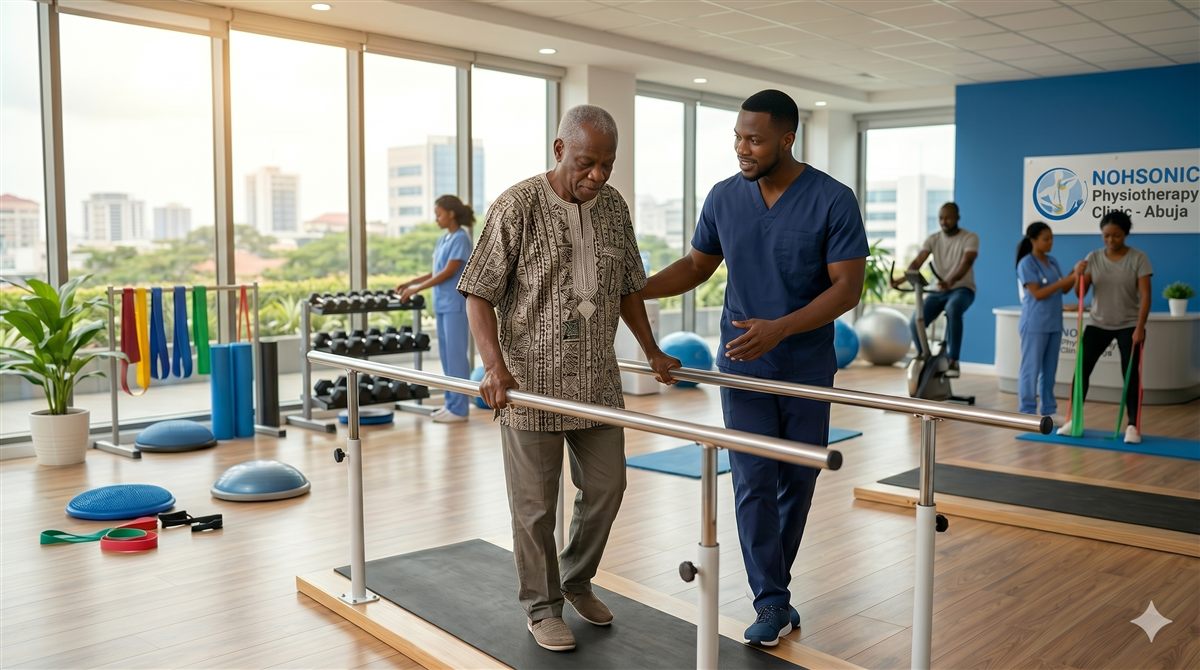
Stroke is one of the leading causes of death and long-term disability in Nigeria. According to medical data, Nigeria has one of the highest stroke burdens in sub-Saharan Africa, and the numbers continue to rise with growing rates of hypertension, diabetes, and an ageing population. A stroke can happen suddenly and without warning — and in an instant, a person's ability to walk, speak, use their arm, or care for themselves can be dramatically altered. It is a devastating experience for patients and their families alike. But there is powerful reason for hope: with early, intensive neurological physiotherapy, the brain has a remarkable capacity to heal and rewire itself. At NOHSONIC Physiotherapy Clinic in Abuja, we specialise in helping stroke survivors and patients with neurological conditions regain their movement, independence, and quality of life.
What Is Neurological Physiotherapy?
Neurological physiotherapy is a specialised branch of physiotherapy focused on conditions that affect the brain, spinal cord, and peripheral nervous system. Unlike musculoskeletal physiotherapy — which treats muscles, joints, and bones — neurological physiotherapy works directly with the neural pathways that control movement, balance, coordination, and sensation. Our neurological physiotherapists have advanced training in understanding how neurological damage manifests physically and in applying techniques that drive neuroplasticity — the brain's ability to form new connections and compensate for damaged areas.
Conditions treated under neurological physiotherapy at NOHSONIC include stroke, Parkinson's disease, multiple sclerosis, spinal cord injury, cerebral palsy, traumatic brain injury, and peripheral neuropathy. Each condition is unique, and each patient's rehabilitation journey is individually designed.
How Physiotherapy Helps After Stroke
The science of stroke recovery is grounded in the concept of neuroplasticity — the brain's ability to reorganise itself by forming new neural connections in response to learning and experience. Physiotherapy is one of the most powerful ways to stimulate this process. At NOHSONIC, our stroke rehabilitation programme includes:
- Task-specific training: Repetitive, meaningful movement practice — such as reaching, grasping, standing, and walking — is the most effective way to drive neuroplastic change. We focus on activities that are relevant to your daily life.
- Gait rehabilitation: Restoring safe, functional walking is a priority for most stroke survivors. We work on step symmetry, balance, weight-bearing, and walking aids where needed.
- Upper limb recovery: Arm and hand weakness or spasticity affects many stroke survivors. We use specific exercises, positioning, and techniques to restore function and manage tone.
- Balance training: Stroke frequently impairs the balance systems of the brain, making falls a major risk. Progressive balance exercises help rebuild confidence and reduce fall risk.
- Fatigue management: Post-stroke fatigue is real and often underestimated. We help patients pace their activity to maximise progress without overtaxing a recovering nervous system.
Other Neurological Conditions We Treat at NOHSONIC
Our neurological physiotherapy service extends well beyond stroke. We provide expert rehabilitation for:
- Parkinson's disease: Exercise is one of the most evidence-supported interventions for Parkinson's. We focus on big movement training, balance, freezing of gait, posture, and fall prevention to maintain independence for as long as possible.
- Multiple sclerosis (MS): We help patients with MS manage fatigue, maintain strength and balance, and adapt their activity levels through relapses and remissions.
- Spinal cord injuries: Whether complete or incomplete, spinal cord injuries require highly specialised rehabilitation to maximise function, prevent complications, and optimise independence.
- Traumatic brain injury (TBI): Road traffic accidents are a major cause of TBI in Nigeria. We support patients in recovering motor function, balance, coordination, and cognitive-motor integration.
- Peripheral neuropathy: Conditions such as diabetic neuropathy cause weakness, numbness, and balance problems. Targeted physiotherapy helps manage symptoms and reduce fall risk.
When Should Neurological Physiotherapy Begin?
The answer is simple: as soon as it is medically safe to do so. Research consistently shows that early physiotherapy — even beginning in the hospital bed in the days following a stroke — leads to significantly better outcomes than delayed intervention. The brain is most receptive to change in the early weeks and months after a neurological event. This is often called the "golden window" of recovery, and making the most of it can mean the difference between partial and full recovery.
For chronic neurological conditions such as Parkinson's and MS, physiotherapy is not a one-time intervention — it is an ongoing, lifelong support that helps patients maintain their function and quality of life over time. Regular physiotherapy can slow the progression of disability significantly.
"Every day without physiotherapy after a stroke is a day of recovery lost. The brain needs consistent, targeted stimulation to rebuild its pathways."
If you or a family member has recently experienced a stroke or has been living with a neurological condition and has not yet received specialist physiotherapy, do not wait any longer. Recovery is possible — and it is never too late to start.
To understand the full scope of what physiotherapy can offer, read our complete guide to physiotherapy in Abuja →
Call us today on 09023333331 / 08131555597 or book your appointment at NOHSONIC Physiotherapy Clinic, 29 Agadez Crescent, Wuse II, Abuja. Our neurological physiotherapy team is ready to help you or your loved one on the road to recovery.