 +234 902 333 3331
 info@npc.clinic
 29 Agadez Crescent, Wuse II, Abuja

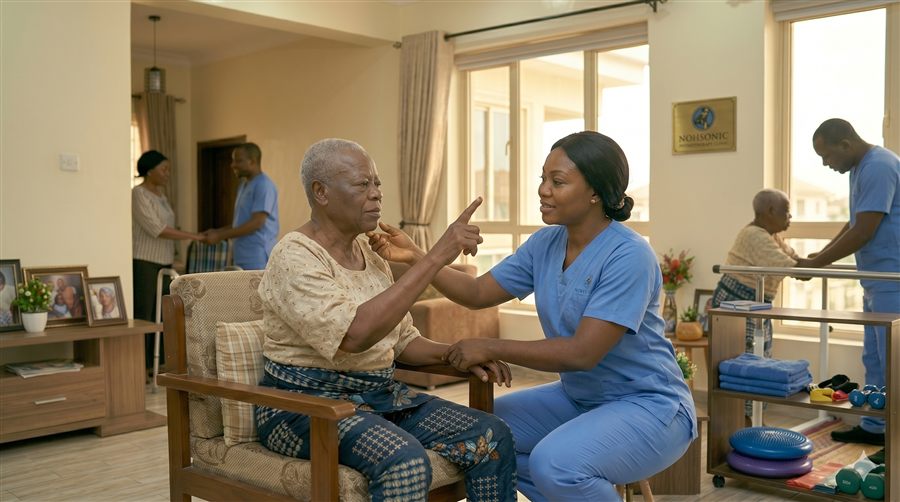
Vestibular Rehabilitation
Specialised treatment for dizziness, vertigo, and balance disorders.
If the world feels like it is spinning, or you struggle with balance, dizziness, or a constant feeling of unsteadiness, vestibular rehabilitation can help. We use targeted, evidence-based exercises to retrain your brain and inner ear to process balance signals correctly — reducing dizziness, improving stability, and restoring your confidence in everyday movement.
Retraining the Balance System
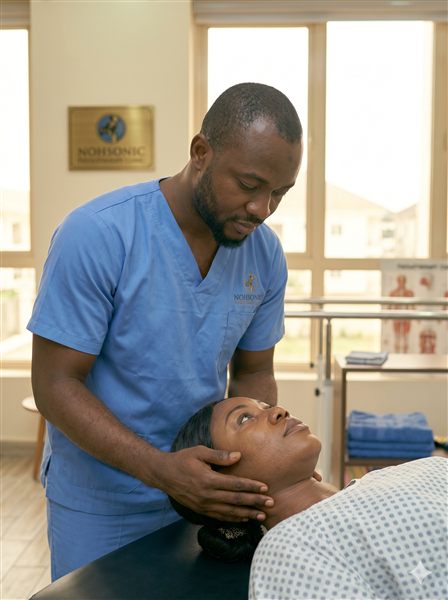
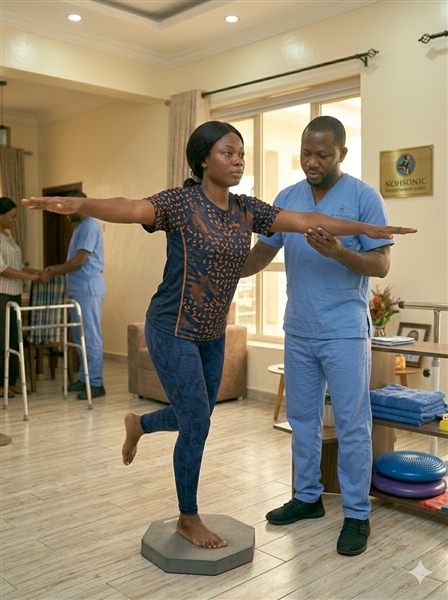
We begin with a specialist vestibular assessment to identify the specific cause and type of your dizziness or balance disorder. Treatment may include repositioning manoeuvres for BPPV, gaze stabilisation exercises, balance training, and habituation exercises. Most patients see meaningful improvement within a few sessions.
- Benign Paroxysmal Positional Vertigo (BPPV)
- Vestibular neuritis
- Labyrinthitis
- Chronic dizziness and disequilibrium
- Balance impairments following neurological events
- Post-concussion dizziness
Frequently Asked Questions
Have a question about vestibular rehabilitation? Here are the questions we hear most often from patients, with honest answers from our team.
BPPV (Benign Paroxysmal Positional Vertigo) is the most common cause of vertigo. It is caused by displaced crystals in the inner ear. It is highly treatable with a repositioning manoeuvre called the Epley procedure, which often resolves symptoms in one or two sessions.
BPPV can be resolved in 1-3 sessions in most cases. Other vestibular disorders may require 6-12 weeks of regular exercise-based rehabilitation. Your therapist will give you a realistic timeline after assessment.
Some exercises are designed to provoke mild dizziness in a controlled way — this is part of how the brain learns to adapt. It is temporary and reduces over time. We always explain what to expect before you do anything.
Yes. Vestibular disorders are a significant cause of falls, particularly in older adults. Balance rehabilitation as part of vestibular treatment directly reduces fall risk.
Ideally yes, to rule out any medical causes of your dizziness. However, if you have not yet seen a doctor, we can assess you and refer on if we identify anything that needs medical investigation.